Judicial Minimalism or Avoidance? A Critical Appraisal of Sudan v. United Arab Emirates
International Court of Justice, Application of the Convention on the Prevention and Punishment of the Crime of Genocide in Sudan (Sudan v. United Arab Emirates), Request for the Indication of Provisional Measures, Order of 5 May 2025
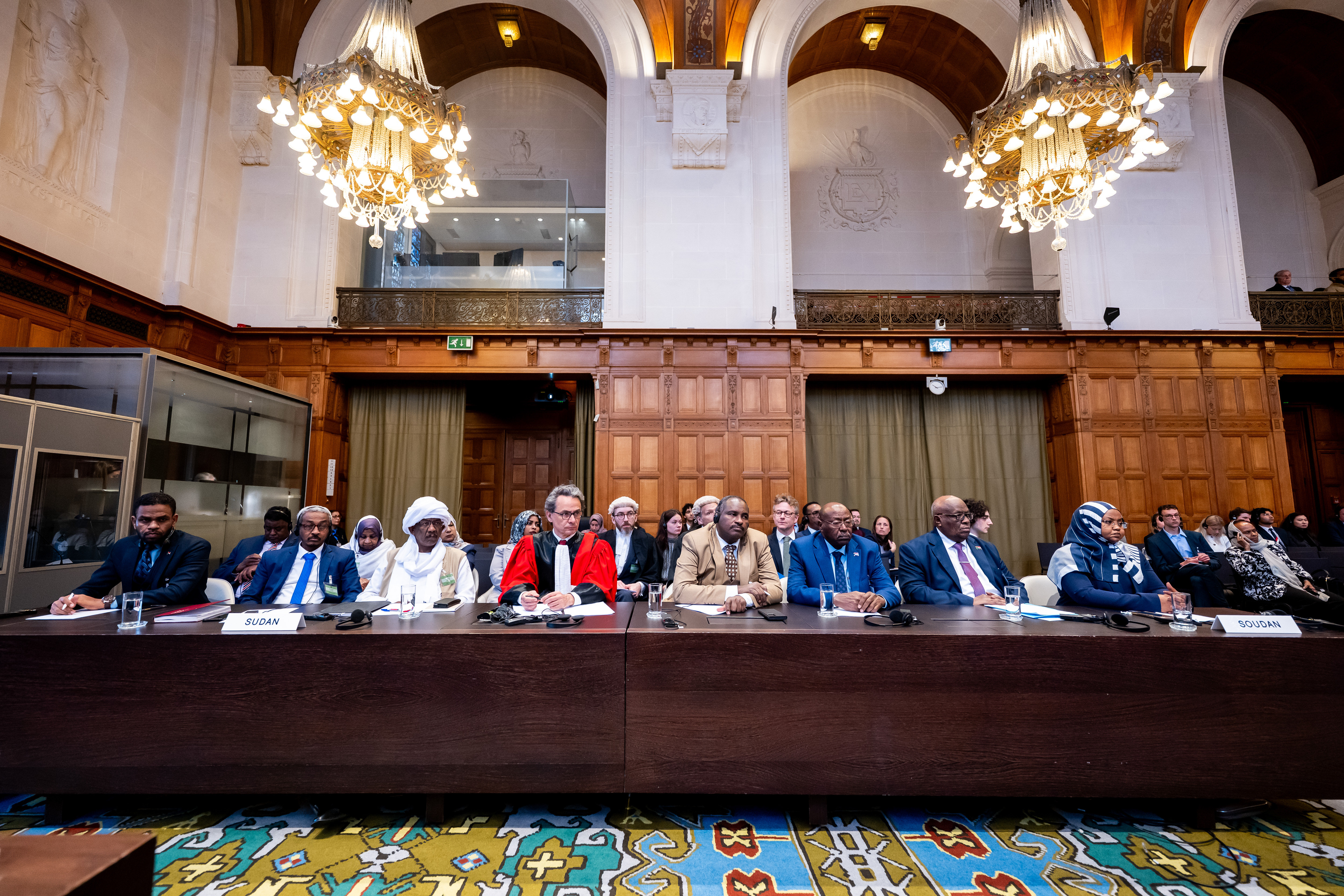
On 5 May 2025, the International Court of Justice dismissed the Request for the indication of provisional measures submitted by the Republic of Sudan against the United Arab Emirates and ordered the removal of the case from the General List in its Order. While the former was passed with an overwhelming majority, the latter reflected a pronounced divide among judges. At the core of the legal disagreement was the Court’s pronunciation of “manifest lack of jurisdiction” at the phase of provisional measures, and its subsequent refusal to entertain the dispute on jurisdiction between the parties. This marked a missed opportunity for the Court to observe legal developments surrounding the application and interpretation of the Convention on the Prevention and Punishment of the Crime of Genocide (hereinafter “Genocide Convention”), specifically on the framework for reservations on the Court’s adjudicative power and compulsory jurisdiction in light of the object and purpose of the Genocide Convention. The Order exemplifies judicial avoidance disguised as minimalism, whereby the Court elevates procedural consent over its role in safeguarding erga omnes and jus cogens obligations.
Case summary
Following a military coup against President Al-Bashir, the Republic of Sudan (hereinafter “Sudan”) has been engulfed in an armed conflict that erupted in April 2023 between two rival factions of its military government, the Sudanese Armed Forces and the paramilitary organisation of Rapid Support Forces. Sudan alleged that the Rapid Support Forces undertook a targeted and systematic military campaign against the Masalit peoples in West Darfur, killing members of the group, inflicting conditions of life which facilitate the destruction of the group, and taking measures to prevent births - all violations under article II of the Genocide Convention.
On 5 March 2025, Sudan filed an Application instituting proceedings against the United Arab Emirates, alleging that the United Arab Emirates breached its obligations under article II of the Genocide Convention and article 1 of the United Nations Charter, through providing support for the paramilitary group and fuelling the atrocities in West Darfur and thereby disrupting international peace and security. Alongside the Application, Sudan also submitted a Request for the indication of provisional measures, with the amended Request including prevention of the alleged acts within the scope of article II Genocide Convention against the Masalit peoples, the ending of complicit collaborations between the groups and the United Arab Emirates, and submission of a report detailing the measures taken by the state to implement the Order. Sudan relied on article IX of the Genocide Convention and article 36(1) of the Statute as basis for jurisdiction, namely on the compromissory clause (clause conferring jurisdiction to the International Court of Justice over disputes on the treaty’s interpretation or application) to the Genocide Convention and the provision empowering the Court to rule over cases relating to matters ‘specially provided for in the Charter of the United Nations or in treaties and conventions in force’. The state questioned the validity of the reservation of the United Arab Emirates to article IX Genocide Convention, on the ground that its language is kept vague, it fails to convey the intent of the reservation, and deliberately omits key phrasing on state responsibility. Furthermore, Sudan considered the reservation to be incompatible with the object and purpose of the Genocide Convention as the reservation denied the operationalisation of the rights and obligations inferred, many of which retain obligations of erga omnes character (obligations owed to the entirety of the international community). Sudan submitted that the lack of state objections to the reservation do not legally prejudice the claims laid out for invalidity.
The United Arab Emirates requested the removal of the Application from the General List and the dismissal of the requested provisional measures, with regard to the manifest lack of jurisdiction through its reservation to the compromissory clause of article IX Genocide Convention, and the absence of other grounds for jurisdiction and consent under article 38(5) of the Rules of the Court. Moreover, it construed the absence of objection to its reservation as acceptance on behalf of Sudan.
The Court pronounced on two legal issues, whether it holds prima facie jurisdiction to indicate provisional measures (meaning an “at first sight” determination of power to pronounce on the matter based on enough evidence or plausible basis to proceed with the case) and whether the case should be removed from the General List (which signifies the complete removal of the case from the Court’s notice).
Firstly, to establish prima facie jurisdiction, the Court considered whether the compromissory clause under article IX Genocide Convention can serve as basis for jurisdiction between parties to the Convention. It found that the reservation of the United Arab Emirates was instated in clear terms and the omission of a phrase did not modify the effects of the reservation, as state responsibility can be inferred from the operative language of article IX Genocide Convention. Noting admissibility under precedent (such as the Legality of Use of Force judgements or Armed Activities on the Territory of the Congo case), and that the reservation in question does not affect the substantive obligations of the United Arab Emirates under the Convention, the Court rejected Sudan’s arguments on the incompatibility of the reservation with the object and purpose of the Convention. As such, the Court ruled that article IX Genocide Convention cannot constitute a basis for prima facie jurisdiction, and subsequently it cannot indicate the requested provisional measures.
Secondly, the Court submitted it cannot adjudicate on merits given the manifest lack of jurisdiction. Basing its reasoning on respect for the “system of consensual jurisdiction” and the principle of “sound administration of justice” (para. 35), the Court ordered the removal of the case from the General List.
The Paradox of Consent
The present Order juxtaposes the principle of consent with erga omnes partes obligations and peremptory norms (fundamental principles that do not admit any derogation, also referred to as jus cogens norms). This juxtaposition is realised through departing from previous jurisprudence on procedural matters through the conflation of prima facie jurisdiction with jurisdiction on the merits, on the grounds of “manifest lack of jurisdiction” and the Court’s subsequent refusal to pronounce on the existing dispute on jurisdiction based on the contested reservation under article IX Genocide Convention, on the grounds of “sound administration of justice”. Ultimately, the Court is presented with a paradox which undermines its legitimacy as the primary judicial body mandated to interpret and operationalise such norms: in upholding of the principle of state consent in the context of reservations, it overrides the notion of state consent that underpins the formation of peremptory norms in international law.
I. Manifest lack of jurisdiction for the sound administration of justice?
In the present case, the removal of the case from the General List rested on the finding of manifest lack of jurisdiction (a basis established in Legality of Use of Force (Yugoslavia v US) para 29). The significance of this decision lies within the court’s explanation of contributing to the sound administration of justice, as it did not merely use the request for provisional measures as basis for discontinuance of the case, but it also rejected the opportunity to observe legal developments on the admissibility of reservations on article IX Genocide Convention, and therefore the operationalisation of jus cogens norms.While the Court rejected Sudan’s Request for the indication of provisional measures by a significant majority, all appended opinions and declarations reject the conflation of prima facie jurisdiction with jurisdiction on the merits and the consequential denial of rights of State Parties to be heard. The Court “effectively punishes” Sudan (see Joint Partly Dissenting Opinion of Judges), as the denial of rights to be heard of State Parties is attributed to the procedural form of the Order over a Judgement, as reiterated in the case of Democratic Republic of Congo v. Rwanda. The principle of consent ultimately compromised states' right to be heard, arguably a segment of the principle of consent in itself.
II. Disregard of existing dispute on jurisdiction and interpretation of reservation
Through the conflation of prima facie jurisdiction with jurisdiction on merits, the Court, by a narrow majority, ordered the removal of the case from the General List, disregarding the existing dispute on substantive jurisdiction and the interpretation of the reservation of the United Arab Emirates for article IX Genocide Convention. The Court dismissed Sudan’s objections to the wording of the reservation but offered only vague arguments supporting its compatibility with the object and purpose of the Convention, namely that it did not preclude substantive obligations. Such reservations effectively neutralise the principal judicial enforcement mechanism of erga omnes obligations under the Genocide Convention (a fact also contemplated in North Sea Continental Shelf para 63), further reinforcing the prioritisation of state consent over peremptory norms.The key juncture in the Court’s argumentation came with its introduction of the principle of consent, which it placed above erga omnes obligations as to the prohibition of genocide. To support the reservation’s validity, the Court recalled its 1951 Advisory Opinion, which expressly allows for reservations under the Genocide Convention, nonetheless, the same Advisory Opinion emphasises common interests, alluding to the erga omnes obligations towards upholding the peremptory norms under the Convention. Following the Court’s reliance on party consent, the non-derogatory nature of jus cogens norms (which the Convention codifies) should be underlined, which presupposes the compatibility between state sovereignty, consent and non-consensual peremptory norms. Such norms can be reconciled through the assumption that restrictions to state consent (for instance by way of jus cogens norms), can enhance state sovereignty. Imperatively, reservations under article IX Genocide Convention effectively bar the operationalisation of the sole judicial mechanism for enforcement, therefore undermining the erga omnes obligations and promoting impunity. Ultimately, the Court’s refusal to reconsider the admissibility of reservations to article IX Genocide Convention in light of its object and purpose as interpreted in Democratic Republic of Congo v. Rwanda para 64, puts the Court’s legitimacy in jeopardy, both for failing to observe legal developments and prioritising consent over the upholding of non-derogable jus cogens norms.
In conclusion, the International Court of Justice further deepened the notion of irreconcilability between the principle of consent and erga omnes obligations, through the procedural conflation of prima facie jurisdiction and jurisdiction on merits, and the subsequent removal of the case from the General List. The disregard for the parties’ dispute on the interpretation of the reservation reflects the Court’s preference for procedural economy over systematic development, and paradoxically further undermines the principle of consent.
Bibliography
International Court of Justice, Application of the Convention on the Prevention and Punishment of the Crime of Genocide in Sudan (Sudan v. United Arab Emirates), Request for the Indication of Provisional Measures, Order of 5 May 2025.
Application of the Convention on the Prevention and Punishment of the Crime of Genocide in Sudan (Sudan v United Arab Emirates) (Dissenting Opinion of Judge Gómez Robledo) (International Court of Justice, 5 May 2025) [4].
Application of the Convention on the Prevention and Punishment of the Crime of Genocide in Sudan (Sudan v United Arab Emirates) (Joint Dissenting Opinion of Judges) (International Court of Justice, 5 May 2025) [16].
Armed Activities on the Territory of the Congo (Democratic Republic of the Congo v Rwanda) (Jurisdiction and Admissibility) [2006] ICJ Rep 6.
Eiko R Thweatt, ‘The Ethics of State Consent to International Law’ (2025) Cambridge Journal of Global Constitutionalism.
Reservations to the Convention on the Prevention and Punishment of the Crime of Genocide, Advisory Opinion, I.C.J. Reports 1951 12-22.
Laurent Sorieul, ‘Provisional Measures and the End of Prima Facie Jurisdiction’ (2025) 74(2) International and Comparative Law Quarterly 320.
Legality of Use of Force (Yugoslavia v United States of America), Order 2 June 1999, ICJ Rep 916, [29].
North Sea Continental Shelf (Federal Republic of Germany/Netherlands; Federal Republic of Germany/Denmark) (Judgment) 20 February 1969, ICJ Rep 3, [63].
Yonah Diamond, ‘The Invalidity of Art. IX Reservations to the Genocide Convention’ (Opinio Juris, 12 March 2025) https://opiniojuris.org/2025/03/12/the-invalidity-of-art-ix-reservations-to-the-genocide- convention/ accessed 28 September 2025.