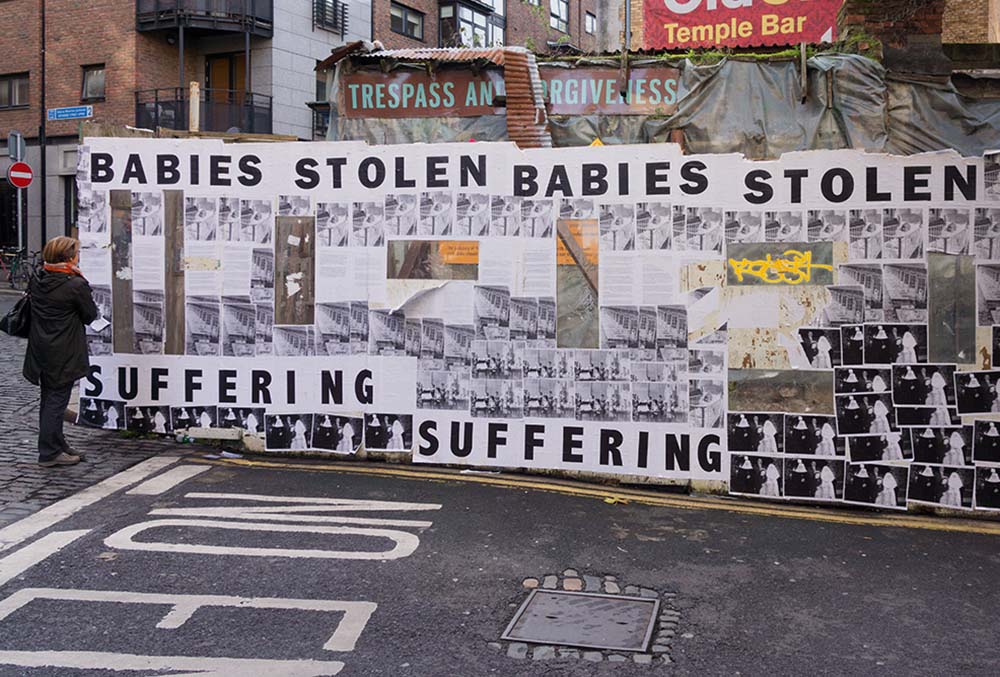
International Criminal Law and Institutional Abuse: Ireland’s Mother and Baby Homes through the Lens of Mass Atrocity
Introduction
In 2017 a mass grave for 796 babies and children was discovered in a septic tank at the Bon Secours Mother and Baby Home in the small Irish town of Tuam. These infants were the collateral damage of decades of systematic institutionalisation of pregnant and so-called ‘fallen’ women and their ‘illegitimate children’ by the Irish Government and the Catholic Church.
This article will focus on the unresolved questions of responsibility for the mass atrocity crimes that took place in the Mother and Baby Homes. Diversity in the financial and governance arrangements in the Homes means that they were often directly managed and funded by local authorities while others were private institutions subject to the control of the Church. Furthermore, questions of Church responsibility are further complicated by the many different orders who ran the Homes.
I will discuss how the current transitional justice framework reflects this confusion in responsibility; there has been a limited acknowledgement of responsibility from the Irish government and even less acknowledgement by the Catholic Church. The Homes are presented instead as purely a symptom of a misogynistic national culture. Consequently, there has been no criminal investigation into the Homes - when everyone is to blame, no one is.
Church and State in Ireland
Before discussing the legal questions of mass atrocity crimes, it is important to first provide a snapshot of the unique role of the Catholic Church in Ireland. Since the colonisation of Ireland by the English in the 12th century, Catholicism has been associated with the nationalist fight for independence, while Protestantism has been tied to loyalty to the Crown. The newly independent Irish state relied heavily upon the Church for institutional support in education, healthcare, and welfare in the 20th century. The lines between Church and State were blurred, granting the Church a privileged position of power and influence. Echoes of this power structure remain today; 90% of all schools in Ireland are under a Catholic organisation.
Mother and Baby Homes
Mother and Baby Homes were established in post-World War I Ireland as part of the state’s legislative reform following independence. The motivation behind these institutions mirrors the highly moralistic and misogynistic thinking of the time in Ireland; these were places to hide and punish so-called ‘fallen women’ and their ‘illegitimate’ children. These Homes functioned as part of an extensive network of “coercive confinement” that spanned across the country and across a number of institutions from reformatory and industrial schools to psychiatric hospitals. While Mother and Baby Homes existed in other countries, the proportion of unmarried mothers who were in the institutions in Ireland is likely the highest in the world. 56,000 women and 57,000 children were kept in the Mother and Baby Homes and state-run county homes investigated by the Mother and Baby Home’s Commission of Investigation, a judicial commission of investigation established by the Irish government in 2015.
Controversially, there has not yet been an official state-led assessment of the abuse that occurred in the Homes through a human rights lens, let alone that of mass atrocities.
Nevertheless, assessing the abuses that occurred through the framework of crimes against humanity highlights not only the gravity and scale of the abuse that occurred but also the profound failures of the State in addressing victims and their families. Within the walls of the Homes a number of crimes against humanity are alleged and evidenced to have taken place, applying Article 7 Rome Statute of the International Criminal Court we can see that it is likely that the criteria for enslavement, imprisonment, torture, and enforced disappearance are met. As will be discussed, women and their children were subject to dehumanising treatment that in many cases amounted to torture. They were ‘hired out’ and forced to work without pay under threat of abuse in what could be considered modern slavery. At least 9000 children died under the care of the Mother and Baby Homes, the vast majority of whom would be buried in unmarked mass graves like that seen in Tuam. Mothers were separated from their children without consent and without any means of tracing them, which combined with the aforementioned practice of mass burial in unmarked graves indicates a system of enforced disappearance.
All of this abuse occurred across the network of homes as part of a system of punishment and coercion.
Article 7(c) Rome Statute: Enslavement
The ICC defines enslavement as requiring, inter alia, the exercise of any or all of the powers attaching to the right of ownership over a person, for instance “[…]such as by purchasing, selling, lending or bartering such a person or persons, or by imposing on them a similar deprivation of liberty”.
By this definition, there are extensive accounts of slavery occurring within the Mother and Baby Homes. In fact unpaid labour was in many ways central to how the Homes functioned, many of which were former workhouses. In spite of government and Church funding, the maintenance of the buildings and grounds, the care of infants and the elderly, and chores such as cooking and cleaning were undertaken by the women resident in the Homes. This work was done “[…] without remuneration under threat of abuse and in abusive circumstances”.Women were forced to work up until the moment of giving birth, and were often forced to carry out punitive tasks such as having to cut a lawn with scissors. One woman described being forced to finish a chore while in active labour.
Additionally, there was a practice of ‘boarding-out’ children from the Homes to foster families. This saw children sent to often impoverished households where the monthly fee paid to the family was treated as an additional form of income rather than a means to support the child. Viewed as a source of unpaid labour, the ‘boarding-out’ arrangement was problematically often arranged to the benefit of the foster family rather than that of the child. Moreover, survivor testimony evidences these children were being forced to carry out hard manual labour whilst being vulnerable to abuse and exploitation.
However much of this testimony is offensively dismissed in Commission’s Final Report which states that “[…]The women worked but they were generally doing the sort of work that they would have done at home”. Such a depiction ignores the blatant reality that these women were in the care of the State and that their labour was both involuntary and uncompensated.
Moreover, the analysis of the treatment of ‘boarded-out’ children is similarly limited in the Commission’s Report. Nevertheless, as pointed out by the Irish Council for Civil Liberties, depending on its extent and severity, the practices could be described as a form of modern slavery.
Article 7(e) Rome Statute: Imprisonment
The crime against humanity of imprisonment entails, inter alia, the imprisonment or severe deprivation of the physical liberty of a person or a group of people, of such gravity that it is in violation of the fundamental rules of international law, and that the imprisonment occurred on a widespread or systematic level. The treatment of the women and children kept in the Mother and Baby Homes meets this definition.
As has been pointed out by the Clann Project, a truth-seeking initiative for unmarried mothers and their children in 20th century Ireland, arbitrary detention was at the heart of Ireland’s treatment of unmarried mothers and their children. Women and girls were systematically detained in a network of institutions, including Mother and Baby Homes, County Homes, and Magdalene Laundries. The decision to enter a Home was rarely taken by the woman herself – family, clergy members, the police, and in one instance a judge chose for the victim to be institutionalised. Once inside, the length of a stay in a Home varied widely and was determined arbitrarily by either the local government or the religious order involved; two-year terms of residence were frequently imposed upon victims. Furthermore, the release of a woman upon entry to a Home was often conditional on her relinquishing her child for adoption or the aforementioned practice of ‘boarding-out’ which could take years to occur.This incarceration took place both without a legal basis and with the knowledge of the State.
While in the Homes, women were completely cut off from the outside world; they were rarely allowed visitors, letters to them were regularly confiscated, and they were barred from making phone calls. Family members on the outside were lied to in order to prevent them from being put in contact with women in the Homes. The language used to describe the women was strictly carceral. For instance, the nuns running the homes would often point to the risk of a woman ‘relapsing’ and having another ‘illegitimate’ child as grounds to prolong her incarceration. Women were characterised as being second or persistent ‘offenders’.Priests and local politicians wrote letters to Homes petitioning for the ‘release’ of individual women. This penal nature of the Homes is also affirmed by the occurrence of and response to ‘escapes’. Often when women managed to flee a Home, they were arrested and brought directly back by local police. Returning to a Home under such circumstances would be met with punishment, such as having one’s hair cut off. There was also a State policy of ‘repatriation’ whereby women who fled from the Irish system of Homes to the UK to give birth or arrange for adoption there were forced back to Irish institutions. This was executed through a mixture of state authorities and voluntary organisations such as the Catholic Protection and Rescue Society of Ireland, which claims to have facilitated the repatriations of 2,610 mothers from 1948 to 1971.
Nevertheless, the Commission of Investigation into the Homes essentially denies this large body of evidence and survivor testimony. Although acknowledging that “The women in mother and baby homes should not have been there.” and that women may have thought that they were incarcerated with some justification, the Commission coldly concludes that even women forced to stay in the homes for 2 years or more had “[…] responsibilities toward their children and the only way in which they could fulfil those responsibilities was by remaining in the institutions”.
Article 7(f) Rome Statute: Torture
The ICC defines torture as the intentional infliction of severe pain or suffering, either mental or physical, on a person in the custody of or under the control of the inflictor. There is extensive evidence that the treatment endured by those within the Homes amounts to torture.
Inextricably linked to the penal character of the Homes, was the degrading and dehumanising treatment systematically inflicted on the women and children detained within. Survivors were subjected to various forms of physical abuse and punishment; when carrying out the aforementioned unpaid labour in the Homes, women described being slapped and punched. There was an atmosphere of fear and the constant threat of punishment. As well as this, the conditions in the Homes were poor and further compounded the suffering of those within. There were serious hygiene issues including insufficient nappy changes for babies and an inadequate provision of sanitary supplies for the women in the Homes, as well as a general lack of privacy and problems with overcrowding. There are numerous accounts of women being denied medical attention, pain-relief, and even being subjected to physical abuse while in the process of giving birth.
Moreover, there was extensive mental suffering and emotional abuse within the Homes. This abuse was not only inflicted deliberately, but also routinely as part of the ethos of the institutions themselves. Upon entry into the Homes women were stripped of their former identity- they were forced to wear a uniform and were assigned a ‘house name’. They were regularly forbidden from speaking about life outside of the Home. The practice of forcibly separating women from their babies was a source of massive amounts of mental and emotional anguish. Women were systematically coerced into surrendering their children for adoption and were often uninformed about the consequences of signing adoption papers.Prior to this separation women were actively deterred from bonding with their baby; for instance, they were not allowed to hold or feed their child and some were even punished for attempting to see their child. In many instances women were not informed when their child would be taken away and when it did occur it was under traumatic circumstances; for instance, women reported being locked in a room while their baby was taken.
The Commission largely denies the survivor testimony and evidence of physical and mental abuse amounting to torture. Although the Commission acknowledged that emotional abuse did occur within the Homes and that “[…] little kindness was shown […]” to women, particularly when giving birth, it shockingly found that there was “[…] very little evidence of physical abuse”.
Article 7(i) Rome Statute: Enforced Disappearance
Enforced disappearance is characterised by the arrest, abduction, or detention of a person or group of people followed by the refusal to acknowledge that deprivation of freedom or to give information on the fate or whereabouts of that person or group.
As alluded to previously, enforced disappearance occurred through the systematic forced separation of mothers and children through adoption or the practice of ‘boarding-out’. Prior to the 1953 Adoption Act, there was no legal basis for adoption in Ireland. However, de facto adoptions took place regardless. When the Adoption Act entered into force it was regularly breached by the Mother and Baby Homes; many women were unable to give informed consent to surrendering their child for adoption as they were not informed sufficiently about the process itself, indeed in certain cases the mother was never approached for her consent at all. Consequently, documents were regularly forged to give the impression of a consensual adoption or to register the adoptive parents as the natural parents of the child in question.Moreover, the names of both the child and mother were often changed in documentary evidence making it extremely difficult for mother and child to reunite or trace each other’s whereabouts. Many of the adopted children have reported being falsely told that their natural mother had died and this is mirrored by the fact that many of the women in the Homes were told lies that their baby had later died after having been adopted. For the few adopted people who managed to access their birth or adoption records they found that often the information within was incomplete, incorrect, redacted, or erased.
Enforced disappearances also occurred through the massively problematic burial practices that took place within Mother and Baby Homes. As discussed earlier in this article, the infant mortality rate within the Homes was atrociously high; in the 18 institutions assessed by the Commission approximately 9,000 children or 15% of those that passed through these institutions died. Despite this, the burial records of the majority of these children remain unlocated. Therefore, the majority of these children were buried in unmarked graves like those seen in Tuam. Horrifically, children were buried in such a manner in one Home up until 1990. The remains of babies from the Homes were treated with a lack of dignity in other ways; in 1965, the remains of 460 infants who died in Mother and Baby Homes were given to anatomy laboratories. It remains unclear whether informed consent of these children’s mothers was ever received or even requested.
Unlike the other crimes against humanity discussed in this article, the crime of enforced disappearance is ongoing until family members are informed about the fate and whereabouts of their relatives. Many of the surviving women from the Homes remain unable to locate the graves of their children due to the lack of proper records surrounding burial practices in the Homes.Similarly, many of the adopted children from the Homes struggled to re-connect with or locate their birth mother due to the falsification and mishandling of their birth and adoption documents.
In spite of this body of evidence, the Commission had no remit to carry out a comprehensive review of the adoption practices within the Homes. Nevertheless, in its brief assessment it concluded that at least from the 1970s to the 1980s there were adequate safeguards to ensure that the consent of the mother was full, free, and informed. In regard to the burial practices, in relation to two Homes the Commission conceded that it is “[…] very hard to believe that there is no one [...] who does not have some knowledge of the burial places of the children”.
Responsibility
The question of responsibility for the atrocities that occurred within the Mother and Baby Homes is one that Irish society continues to grapple with today.
In a legal sense, responsibility is clouded by the diversity in the financial and governing arrangements of the Homes. However, at a fundamental level, the State funded all Mother and Baby Homes to some extent, although the degree of financial involvement varied. Additionally, the State had a basic and undeniable responsibility to regulate the Homes and react to the allegations of abuse and ill-treatment that were occurring. However, when inspectors from the Department of Local Government and Public Health raised serious concerns about the appalling rates of infant mortality in the Homes they were met with no State response. A blind eye was turned to an inconvenient and horrific truth.
Indeed, as well as incurring direct responsibility for many of the atrocities committed within the walls of the Homes the State also bears indirect responsibility for the culture of concealment it fostered through legislation and policy that marginalised and demonised unmarried mothers and their children. For instance, despite there being an awareness of a systemic culture of family separation in the Homes, twice the Irish government legislated to strengthen the practice of forced adoption by reducing the minimum age at which adoption could occur from 6 months to just 6 weeks, and by enabling the High Court to discard the requirement of a second consent when the mother refused to grant it.
The Roman Catholic Church also bears a large degree of responsibility for the atrocities that occurred within the Homes. The majority of the Homes were run by Catholic orders of nuns, largely in a continuation of their role in managing institutions such as workhouses pre-Independence. In this way, the State essentially delegated the role of the provision of social services to unmarried mothers and their children, to private religious orders. The abuse suffered by those in the Homes was at the hands of the nuns who until 1960 enjoyed a significant degree of autonomy at all levels of running the Homes. There is also a clear ongoing responsibility of these religious orders as regards the crime of enforced disappearance. As the Commission had acknowledged, there are those within the Church who know more than they are saying concerning the location of the graves of infants born in the Homes. The Church also has an obligation to facilitate those who were adopted in determining the fate of their birth mother, and vice-versa.
Although the question of responsibility is undoubtedly multifaceted, disappointingly little has been done to formally establish accountability for the atrocities of the Mother and Baby Homes. The Commission offensively concluded that responsibility for the suffering of the mothers and children of the Homes rests predominantly with the fathers of their children, and their immediate families. In shifting the blame for what occurred on to Irish society as a collective, the Homes are morphed into providing “[….] refuge - a harsh refuge in some cases - when the families provided no refuge at all”. This is a conclusion which conveniently shields the State and the Church from legal responsibility, and which reduces the atrocities to the scandals of an Ireland of yesterday – mere symptoms of a prevailing culture of misogyny as opposed to crimes for which individuals and systems can and should be held to account.
The Question of Justice
In the absence of accountability and responsibility, justice for what occurred in the Homes has only ever existed in a diluted form.
For instance, the Commission of Investigation as a truth-seeking mission was entrusted with establishing guidelines for the framework in which redress and compensation would occur. However, the Commission and its report have been massively controversial.
Firstly, there were two Committees involved in the drafting of the report on the Mother and Baby Homes; the Confidential Committee and the Investigation Committee. The Confidential Committee was established to collect anonymised testimony from survivors of the Homes, and indeed gathered extensive accounts of physical and emotional abuse and ill treatment. However, when the Final Report was published it became clear that the testimony given to the Confidential Committee was essentially siloed into a separate report and was rarely even considered in the Final Report. This is despite the fact the Confidential Committee heard from 550 witnesses, while the Investigation Committee heard from just 64 individuals and it remains unclear how these were selected.
Moreover, the Confidential Committee has also been criticised for inaccuracies and misrepresentations in its treatment of survivor testimony.Further controversy arose when the Commission claimed to have destroyed the recorded testimony of over 500 witnesses, allegedly without their knowledge or consent.Although the testimony was later stored in a database managed by the Irish Child and Family Agency, Tusla, such disputes underscore the contentious nature of the relationship between the Commission and its investigation and survivors of the Homes. This was further confirmed when 8 survivors brought a legal challenge against the findings of the Commission. The government ultimately accepted that the Commission had breached its duty by not giving survivors a draft of the final report before publishing. This omission meant that there was no opportunity for survivors to correct or raise points of concern, although this privilege was granted to State and Church actors.
The remit and scope of the Committee’s investigation has also been subject to criticism. The Report ultimately considered just 14 institutions, although there were up to 228 institutions of relevance. Moreover, the terms of reference also limited the quality of the investigation. Indeed, the failure of the Commission’s Report to engage meaningfully with a human rights assessment of the Mother and Baby Homes was one of the points raised by Experts on the United Nations Human Rights Committee in 2022. It is also of relevance that the Commission would only use half of its 23 million euro budget – a fact which renders its weaknesses a particularly damning choice, rather than the result of an underfunded investigation.
Another important gesture in terms of delivering justice to the survivors of the Homes was when the Taoiseach (Prime Minister) Micheál Martin issued a formal State Apology in 2021 wherein he acknowledged the “[…] profound generational wrong visited upon Irish mothers and their children who ended up in a mother and baby home or a county home”. This apology has been paired with a package of legislative reforms. The Birth (Information and Tracing) Act 2022 enshrined, for the first time in Irish law, the right to full birth, early life, care and medical information for anyone with questions regarding their origins. Importantly, it grants adopted people an absolute right to their birth information, regardless of the wishes of their birth parents. However, the Redress Scheme established under Mother and Baby Institutional Payment Scheme Act was more problematic. It, inter alia, arbitrarily excluded survivors separated from their mothers before the age of 6 months from compensation, and it did not recognise the abuse suffered by those who were ‘boarded-out’, nor the entitlement of women in 13/14 Homes to compensation for their unpaid labour. Moreover, the Institutional Burials Act 2022 paves the way for the identification, and/or memorialisation of remains involved in “manifestly inappropriate burials” and was borne directly of the Tuam babies scandal.
On the part of the Church, there have been limited demonstrations of contrition. Eamon Martin, primate of the Catholic Church in Ireland, accepted in 2021 that the Church was part of a culture in which “[…]people were frequently stigmatised, judged and rejected” in an official apology. The Sisters of Bon Secours, who ran the Tuam Home, acknowledged that they “[…] did not live up to [their] Christianity when running the Home”. When Pope Francis visited Ireland in 2018 he met with survivors of Church abuse, including survivors of the Mother and Baby Homes. He prayed for forgiveness for the abuse that occurred in Ireland at a mass held in Phoenix Park in Dublin. In spite of this there has been little in the way of concrete measures towards justice; of the 8 religious orders linked to the Homes, only 2 have offered to contribute towards a survivor compensation scheme.
Conclusion
The language of mass atrocity is a valuable lens through which the severity of the abuse that occurred in and through the Mother and Baby Homes should be viewed.
In viewing the atrocities that both Church and State were complicit in and responsible for in this way both the gravity of the abuse, and the staggering failure in delivering justice are laid bare. Crucially, such an analysis demonstrates the deep interconnections between accountability and justice. Without established responsibility, particularly of the religious orders involved, meaningful transitional justice has yet to occur - deepening rather than healing the wounds of survivors. There have been no criminal trials either nationally or internationally for what occurred in the Mother and Baby Homes. Combined with the persistent difficulties faced by aging survivors in terms of accessing their birth, adoption, and burial records despite new legislation, an old adage comes to mind; justice delayed is justice denied.
Bibliography
‘A Dark, Difficult, and Shameful Chapter’(History Workshop, 21 January 2021) <https://www.historyworkshop.org.uk/family-childhood/mother-and-baby-homes-report/>
Catriona Crowe ‘The commission and the survivors’ (The Dublin Review, Summer 2021) <https://thedublinreview.com/article/the-commission-and-the-survivors/>
Clann, ‘Redress Scheme Email Campaign’(Clann Project) <https://clannproject.org/redress_scheme/redress-scheme-email-campaign/> accessed 24 November 2025.
Commission of Investigation into Mother and Baby Homes, Final Report of the Commission of Investigation into Mother and Baby Homes: Executive Summary (12 January 2021) Confidential Committee, Report of the Confidential Committee to the Commission of Investigation into Mother and Baby Homes (October 2020)
Daithí Ó Corráin, ‘The Catholic Church, the State and Society in Independent Ireland, 1922- 2022’ (Jesuit Centre for Faith and Justice, 21 January 2022) <https://www.jcfj.ie/article/the catholic-church-the-state-and-society-in-independent-ireland-1922-2022/>
Dan Barry, ‘The Lost Children of Tuam’ The New York Times (New York, 28 October 2017) Eileen O’Connor, ‘Statement of the Sisters of Bon Secours upon publication of the Report of the Commission of Investigation into Mother and Baby Homes’(Bon Secours Sisters) <https://www.bonsecourssisters.ie/apology-statement>
Eimear Flanagan, ‘Mother-and-baby homes: Questions raised over deleted recordings’ (BBC, 10 February 2021) <https://www.bbc.com/news/world-europe-55909216> Ellen Coyne, ‘Mother and baby home records held in database ‘not fit for purpose’’ The Irish Times (The Irish Times, 24 November 2025)
Eoin O’Sullivan and Ian O’Donnell ‘Mother and baby homes inquiry: now reveal the secrets of Ireland’s psychiatric hospitals’(Trinity College Dublin, 26 January 2021) <https://www.tcd.ie/news_events/articles/mother-and-baby-homes-inquiry-now-reveal-the secrets-of-irelands-psychiatric-hospitals/ >
Erin Blakemore, ‘How Ireland Turned ‘Fallen Women’ Into Slaves’ (History, 21 July 2019) < https://www.history.com/news/magdalene-laundry-ireland-asylum-abuse>
European Academy on Religion and Society, ‘Ireland: A strong religious presence in the education system’ (European Academy on Religion and Society, 7 June 2021) <https://europeanacademyofreligionandsociety.com/education/ireland-a-strong-religious presence-in-the-education-system/>
Ian Donahue,‘Health and Human Rights: Ireland’s Policies of Abuse in Mother and Baby Homes’2023 4 The Macksey Journal
International Criminal Court, Elements of Crimes
Irish Council for Civil Liberties, Human Rights Obligations of Government following publication of Mother and Baby Homes Commission’s Final Report (Briefing Note, March 2021)
Jamie Aspell, ‘Ireland’s Birth Information and Tracing Act: Reconciling the Right to Identity’(EJIL:Talk!, 23 September 2022) <https://www.ejiltalk.org/irelands-birth information-and-tracing-act-reconciling-the-right-to-identity/>
Jude Murray, ‘Does the Institutional Burials Act respect the dead or bury our shame?’(Irish Legal News, 22 August 2022) <https://www.irishlegal.com/articles/jude-murray-bl-does-the institutional-burials-act-respect-the-dead-or-bury-our-shame> accessed 24 November 2025. Maeve O'Rourke, Claire McGettrick, Rod Baker, Raymond Hill et al. CLANN: Ireland's Unmarried Mothers and their Children: Gathering the Data: Principal Submission to the Commission of Investigation into Mother and Baby Homes (Principal Submission to the Commission of Investigation into Mother and Baby Homes, 15 October 2018)
‘Micheál Martin, ‘Dáil Éireann debate - Wednesday, 13 Jan 2021’ (Tithe an Oireachtais Houses of the Oireachtais, 13 January 2021) <https://www.oireachtas.ie/en/debates/debate/dail/2021-01-13/10/>
Órla Ryan, ‘'We've been totally vindicated': State admits rights of Mother & Baby Home survivors were breached’ The Journal (The Journal, 17 December 2021)
Pope Francis, ‘Holy Mass: Apostolic Visit of His Holiness to Ireland on the Occasion of the IX World Meeting of Famililes’ (26 August 2018, Phoenix Park Dublin).
Rhiannon Lucy Cosslett, ‘Ireland’s mother-and-baby homes are a stain on the Catholic church – but this latest refusal to atone is a new low’ The Guardian (The Guardian, 13 April 2025)
Rome Statute of the International Criminal Court
Rory Carrol, ‘Irish church and state apologise for callous mother and baby homes’ The Guardian (The Guardian, 13 January 2021)
Rory Carroll, ‘A stain on Ireland’s conscience’: identification to begin of 796 bodies buried at children’s home’ The Observer (Galway, 25 June 2023)
Sarah Burns, ‘Pope Francis ‘shocked’ upon hearing about mother-and-baby homes’ The Irish Times (The Irish Times, 26 August 2018)
Serena Clark, ‘Forgive us our Trespasses: Mother and Baby Homes in Ireland’ (2021) 20(1) Visual Communication
United Nations Human Rights Committee ‘In Dialogue with Ireland, ‘Experts of the Human Rights Committee Praise Legislation Combatting Hate Crimes, Raise Issues Concerning Rights Abuses at Institutions’(United Nations, 5 July 2022) <https://www.ohchr.org/en/press releases/2022/07/dialogue-ireland-experts-human-rights-committee-praise-legislation>
Unmarried mothers' repatriations: 'I should never have been in Ireland’ (29 June 2023) <https://www.bbc.com/news/world-europe-66031767>
Image: https://www.ncronline.org/news/social-justice/irish-bill-help-adoptees-find-birth-information-falls-short-critics-say credited to Flickr/William Murphy